
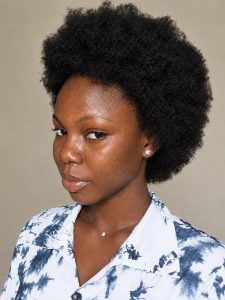
I am the girl.
I know it sounds like a strange way to introduce myself, especially after spending so much time describing myself as though I am someone I am merely watching from a distance.
Perhaps that is the problem.
I have spent so much time observing people that I sometimes forget I am one of them.
I am not the girl who always knows what to say. I am not the girl who enters a room and immediately becomes the centre of attention. I am not even the girl who has a story ready whenever someone asks how her day went.
I listen.
That is what I do best.
At least, that is what I thought.
Then he sat across from me.
It happened on an ordinary Friday, late in the afternoon.
The cafe was unusually crowded. Every table seemed occupied, and the noise had risen to the point where conversations were competing with one another. A group of boys were arguing about football near the entrance. Two girls were taking pictures of their food. Someone at the back was complaining about an assignment. A lecturer’s name appeared in at least three different conversations.
I had my notebook open in front of me.
I was writing down something a girl had said a few minutes earlier.
Sometimes people don’t miss you. They miss how you made them feel.
I was still staring at the sentence when someone stopped beside my table.
“Is this seat taken?”
I looked up.
He was holding a book in one hand and a bottle of drink in the other.
I looked at the empty chair.
“No.”
“Good.”
He sat down.
Just like that.
He placed his book on the table and opened it.
I looked back at my notebook.
I tried to continue writing.
I couldn’t.
Not because he was particularly distracting.
At least, that was what I told myself.
He read for a while. I wrote for a while. Around us, the cafe continued doing what it always did.
People talked.
I listened.
Then he suddenly said, “Do you always write down things people say?”
My pen stopped.
I looked at him.
He was still looking at his book.
“Excuse me?”
He pointed at my notebook.
“I’ve noticed it.”
“And I’ve noticed you.”
I closed it slightly.
“You’ve noticed?”
He smiled.
“I have eyes.”
I almost laughed.
Almost.
“And you’ve been watching me?”
“Not exactly.”
“Then how did you notice?”
He finally looked at me.
“You write whenever someone says something that interests you. You did it when those two girls were arguing about relationships. You did it when that guy near the window said something about his lecturer. You did it just now. You do it every other day too.”
I looked down at my notebook.
He was right.
I didn’t know whether I was impressed or slightly uncomfortable.
“You pay a lot of attention,” I said.
“I could say the same about you.”
That answer made me look at him again.
There are people who speak simply because silence makes them uncomfortable. Then there are people who speak because they have actually thought about what they are saying.
He seemed like the second kind.
“What do you think I write?” I asked.
“Conversations.”
I raised an eyebrow.
“That’s obvious.”
“Then observations.”
“Also obvious.”
“Questions.”
I paused.
That one was not obvious.
“How did you know?”
He closed his book.
“Because people who collect answers rarely write as much as people who collect questions.”
For a moment, I said nothing.
I had spent years listening to people.
This was the first time someone had made me feel listened to.
Not understood.
That would have been too much to assume after five minutes.
But noticed.
There is a difference.
“What do you read?” I asked, partly to change the subject.
He turned the book toward me.
I recognised the title.
“Philosophy?”
“Among other things.”
“Do you understand it?”
He laughed.
“Not always.”
“Then why read it?”
“Because understanding everything isn’t the point.”
I waited.
“Sometimes you read because a question changes the way you think, even if the book never gives you an answer.”
I looked at him for a moment.
That sounded familiar.
Perhaps because I had been living that way without knowing how to explain it.
“Do you always talk like this?” I asked.
“Like what?”
“Like you’re answering a question nobody asked.”
He smiled.
“Only when nobody asks interesting questions.”
I laughed.
This time, I actually laughed.
He smiled when he heard it, but didn’t make a big deal of it.
That was another thing I noticed.
Some people become excited when they discover they have made you laugh. They repeat the joke, explain it, or begin performing for you.
He simply returned to his book.
As if my laughter belonged to me.
I liked that.
I don’t know why.
Maybe because there was something strangely comfortable about not being expected to perform in return.
We sat quietly for another few minutes.
Then he asked, “What’s your name?”
I told him.
I asked for his too.
He answered.
I repeated it once in my head.
I had always been good at remembering sentences.
Names were different.
But this one stayed.
Maybe because I wanted it to.
“Nice to meet you.”
“Nice to meet you too.”
And that should have been the end of it.
A stranger sits beside me in a crowded cafe. We exchange a few words. We discover that we both enjoy thinking about things that most people consider unnecessarily complicated.
Then we leave.
Simple.
Except he did not leave.
Neither did I.
The afternoon stretched.
Our conversation moved from books to lecturers, from lecturers to language, from language to people, and from people to the strange ways we misunderstand one another.
He knew things.
Not in the irritating way some people do, where knowledge becomes an opportunity to prove that everyone else knows less.
He was simply curious.
He could explain why certain words had changed meaning over time. He knew bits of history I had never heard before. He had thoughts about architecture, music, politics, psychology, religion, technology, and even why people preferred certain colours.
At one point, I asked him how he knew so much.
He shrugged.
“I don’t.”
“You clearly do.”
“No. I just know a little about many things.”
“What’s the difference?”
He thought for a moment.
“Knowing many things can make you interesting. Knowing how little you know can keep you interested.”
I wrote that down.
He noticed.
“You’re writing that one?”
“Yes.”
“Why?”
“Because I like it.”
He smiled.
“Then I hope you don’t write everything I say.”
“Why?”
“Because then I might start choosing my words carefully.”
I closed my notebook.
“Would that be a bad thing?”
“Very.”
“Why?”
“Because the things people say when they aren’t trying to sound intelligent are usually more interesting.”
I looked at him.
For the first time since he sat down, I wondered if he knew what he was doing.
Not flirting.
Not exactly.
Something else.
He was making me curious.
And curiosity has always been dangerous for me.
It makes me stay.
It makes me ask another question.
Then another.
Until I forget that I came somewhere for a completely different reason.
The cafe began to empty around us.
The football argument had ended. The girls taking pictures had left. The lecturer’s name had disappeared from every conversation.
The light outside had softened.
He closed his book.
“I should go.”
I nodded.
He stood.
Then he looked at my notebook.
“Will I find myself in there tomorrow?”
I smiled.
“Maybe.”
“That’s dangerous.”
“Why?”
“Because now I’ll have to be careful what I say around you.”
I shook my head.
“You’ve already said too much.”
“Then I suppose I have no choice.”
“What choice?”
He picked up his book.
“To come back tomorrow.”
And then he left.
I watched him walk out of the cafe.
I told myself I was only watching because I was curious.
That was the first lie I told myself about him.
I opened my notebook.
I turned to a fresh page.
For a long time, I didn’t write anything.
Then I wrote his name.
Nothing else.
Just his name.
I stared at it for a few seconds before closing the notebook.
Maybe this is how stories begin.
Not with something extraordinary.
Not with thunder.
Not with certainty.
Sometimes they begin with an empty chair, a stranger asking permission to sit, and a conversation that lasts longer than it was supposed to.
Sometimes they begin with a person who makes you forget to listen to everyone else.
And perhaps, for the first time in my life, I was beginning to wonder what it would feel like to be the conversation someone else wanted to keep.


Comments