

There have been arguments about whether the mind truly exists or whether it is merely an abstract concept we use to explain human experience. But perhaps a more interesting question is this: Why do we sometimes know what is right yet struggle to do it? Why do we make decisions we cannot logically defend, hold on to things we know we should release, or feel things we cannot adequately explain? Perhaps understanding the mind requires us to recognise two fundamental dimensions of our mental lives: the emotional mind and the rational mind.
The rational mind thinks, analyses, questions, and reflects. The emotional mind feels, reacts, desires, and responds. Daniel Goleman, in his book Emotional Intelligence, captures this distinction: “In a very real sense we have two minds, one that thinks and one that feels.” These two minds work together, but they do not always agree. And perhaps some of the most difficult moments of being human emerge from the distance between what we know and what we feel.
Consider a woman going through a painful divorce after twenty-one years of marriage. Her husband had fallen in love with another woman and decided to leave. Months of bitter arguments over property, finances, and their children followed. Some months later, the woman began telling a friend how much she enjoyed her independence. She insisted that she no longer thought about her former husband and genuinely did not care about him anymore. Yet, as she spoke, her eyes momentarily filled with tears. Her words suggested that she had moved on, but her tears hinted at something more complicated. Perhaps she was happy to be independent and still grieved the loss of a relationship that had occupied twenty-one years of her life. Both feelings could be genuine. She did not necessarily have to be lying to her friend; she might simply have been experiencing two different emotional realities at once.
Sometimes, what we know and what we feel are two different things, and the struggle to reconcile them is part of what makes us human.
The rational mind might recognise that a relationship has ended, while the emotional mind continues to feel attached to what once existed. We can understand that failure is part of learning and still feel ashamed when we fail. We can know that anger will worsen an argument and still feel compelled to respond harshly. We can recognise that someone has hurt us and understand why we should forgive them, yet struggle with the feelings that forgiveness demands we confront. Why does this happen?
One reason is that our emotional responses can be much faster than our deliberate reasoning. Before we have fully examined a situation, we may already feel threatened, rejected, embarrassed, or angry. We react, and only afterwards do we begin to consider whether our reaction was justified.
Think about an argument in which you say something hurtful in the heat of the moment. You may know that your words are unnecessary, yet the desire to defend your pride becomes stronger than your judgement. When the anger subsides, you begin to regret what you said. The knowledge that could have guided your response was there, but you struggled to act on it.
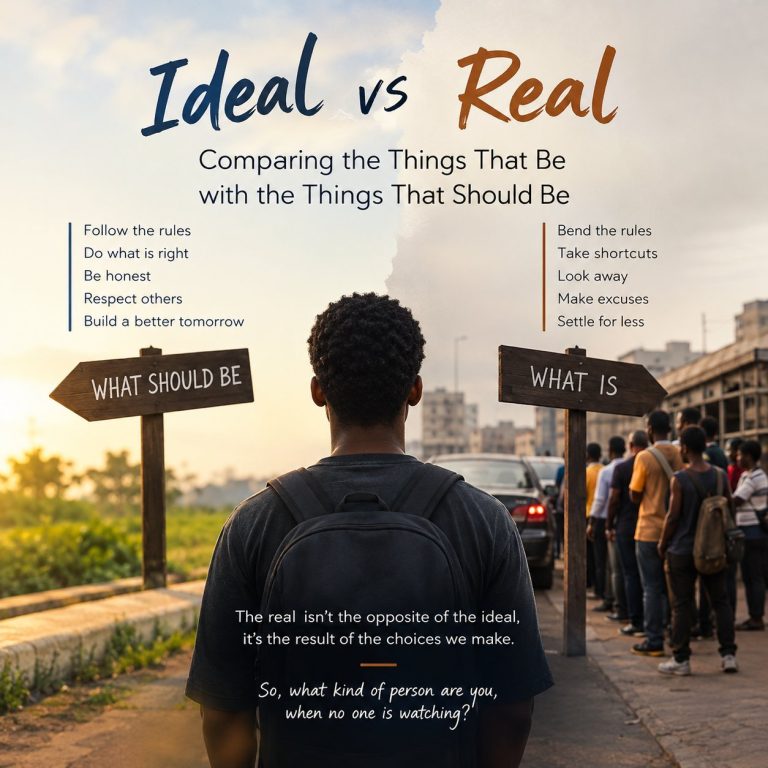
This reveals something important: knowing what is right does not automatically give us the emotional strength to do what is right.
Our emotions are not necessarily enemies of reason, however. They help us recognise what matters to us. Reason may tell us that someone is suffering, but compassion makes that suffering meaningful to us. We may understand the importance of apologising, but empathy helps us recognise the pain we have caused. Without emotion, our decisions might remain logical, but they would lose much of their human significance.
At the same time, feelings cannot always be trusted as accurate interpretations of reality. Feeling rejected does not necessarily mean we have been rejected. Feeling afraid does not automatically mean we are in danger. An emotion can be real without the conclusion attached to it being correct.
This is where reason becomes necessary. It helps us question our feelings, examine our assumptions, and decide whether our reactions reflect reality. Likewise, emotion gives our reasoning a sense of meaning and purpose. The two are not entirely separate minds competing for control; they are interconnected dimensions of how we think, feel, and experience the world.
Perhaps maturity, then, is not about becoming less emotional or more rational. It is about learning to recognise what we feel without allowing every feeling to determine what we do. It is understanding that anger can be acknowledged without becoming cruelty, that fear can be felt without dictating every decision, and that pain can be accepted without being passed on to others.
But there is another side to this. Sometimes, we are too quick to judge people for acting against their own interests, forgetting that human behaviour is not governed by knowledge alone. Someone may understand what they ought to do and still struggle to do it. This does not excuse every mistake, but it reminds us that understanding a person’s reasoning may not be enough to understand their behaviour. We must also consider what they feel, what they fear, and what their experiences have taught them to expect.
Perhaps the same understanding should be extended to ourselves. We should not assume that every emotional struggle is a failure of intelligence or that every contradiction within us is a sign of weakness. Sometimes, we understand a truth long before we are emotionally ready to live by it. Sometimes, the mind arrives at a conclusion that the heart needs time to accept.
We do not always suffer because we do not know what to do. Sometimes, we suffer because knowing what to do and being ready to do it are two different things.
Ultimately, we are neither purely rational nor purely emotional beings. We are shaped by the continuous interaction between what we think and what we feel. The rational mind helps us question our emotions, while the emotional mind reminds us that not everything meaningful can be reduced to facts and logic.
Perhaps wisdom lies in learning to listen to both without allowing either to silence the other.
And this leaves us with a question worth considering: How do we learn to live wisely when the mind that knows what is right and the mind that feels what it wants do not always agree?





Comments