

I know you know phonology. You also know philosophy. You are familiar with phonetics. But why have we forgotten their mother, philology?
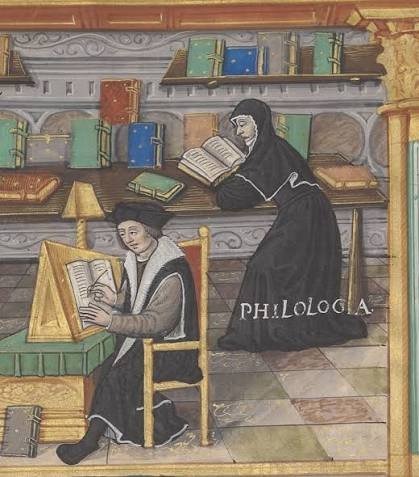
The word “philology” comes from the Greek “philologia,” commonly understood as the love of words or love of learning. In its modern intellectual sense, philology has come to encompass the close and historically informed study of language and texts that includes the meanings that words acquire within particular cultural, historical, and textual contexts. Edward Said’s (2004) call for a “return to philology” was therefore not simply a call to revive an old academic discipline. It was a call to recover a way of reading in which the text itself matters, in which language deserves attention and in which interpretation begins with the difficult work of understanding what has actually been written.
This is important at a time when reading has become an exercise in retrieval. We search for a quotation, read an abstract, consult a summary, and move on. A novel becomes a plot summary, a poem becomes an explanation of its themes, and an academic book becomes a collection of quotations that can be inserted into an argument. The convenience is obvious, but something is lost in the process. A summary can tell us what happens in a text. However, the concern is that it cannot give us the experience of reading the text itself. It cannot reproduce every choice of diction, every sentence construction, every ambiguity, every shift in tone, or every small detail through which a writer creates meaning.
I have always found this relevant in teaching literature. When I taught literature at the secondary school level, I did not simply explain the prescribed texts to students. I expected them to read the texts before coming to class. The classroom was for discussion. They had to encounter the characters, sentences, images, and events for themselves before we began interpreting them together.
Something changes when students actually read. They begin to notice things that no summary can adequately preserve. They notice how a character speaks, why a particular word appears at a particular moment, how a sentence is constructed, how a narrator directs attention, and how a character develops across the text. They begin to make connections between apparently insignificant details. More importantly, they develop a relationship with the text rather than merely acquiring information about it.
This is what makes the idea of the implied reader particularly useful. The implied reader is not simply someone who knows the plot of a book. The concept, associated especially with Wolfgang Iser, describes the readerly position anticipated by the structure of a text. Such a reader participates in the process through which meaning is produced. To read in this sense is to inhabit the text closely enough to recognise its patterns, tensions and assumptions. You can remember that a particular character said something several chapters earlier, recognise an echo of an earlier expression or identify why a seemingly minor detail becomes significant later. You know the text because you have actually read it.
There is a peculiar kind of knowledge that comes from this form of reading. You can encounter a claim about a book and immediately remember the passage that complicates it. You can hear someone describe a character and know that the description is incomplete because you remember what the character actually says. You can encounter a quotation and know what surrounds it. I read return to Said’s argument here. His return to philology was a return to the practice of reading texts with attention to their language and historical circumstances. He was interested in the relationship between textual detail and larger questions of history, culture, and power. For Said, reading was not an escape from the world. On the contrary, close attention to a text could reveal the historical world from which it emerged and the assumptions through which that world was represented.
A return to philology, therefore, does not require us to abandon theory. It requires us to prevent theory from replacing reading. We can approach a novel through postcolonial theory, a poem through stylistics, or a political speech through discourse analysis, but the theoretical framework should not become an excuse for neglecting the language of the text. The text must remain capable of resisting our expectations. Sometimes, a sentence will complicate the theory. Sometimes a word will force us to reconsider an argument. Sometimes the smallest textual detail will open a much larger question.
Perhaps, then, the return to philology is not a return to the past at all. It is a way of thinking about how we should read in the present. We still have to ask why a writer chose one word rather than another, why a sentence takes a particular form, why an image is repeated, why a translation changes an expression, and what is gained or lost in that change.
Reading the summary is easy. Reading the text requires something more. It requires time, patience, and curiosity. It requires us to remain at work even when it becomes difficult. It requires us to encounter sentences that do not immediately yield their meaning and to resist the urge to replace that difficulty with somebody else’s explanation.
So, if you want to expand your knowledge, read. If you want to understand literature, read the literature. If you want to write about a book, read the book. If you want to make claims about a writer’s language, go back to the language. Read beyond the summary and, whenever possible, return to the text itself.
Perhaps this is what Said’s return to philology can still teach us. Before we analyse a text, we have to encounter it. Before we explain its meaning, we have to listen to its language. And before we decide what a work has to say, we should give it enough attention to discover what it is actually saying.
The Return to Philology
Sign in to like this work. Likes count towards the creator's profile and the monthly competition.
© 2026 Tosin Adesokan. Published on Adroit Creators with the creator's permission. The creator keeps the copyright in this work, and it may not be reproduced without their consent.



2 comments
Insightful!
Thank you.